Typing for Neurodiverse Learners: Why Touch Typing is a Game-Changer for Dyslexia and ADHD
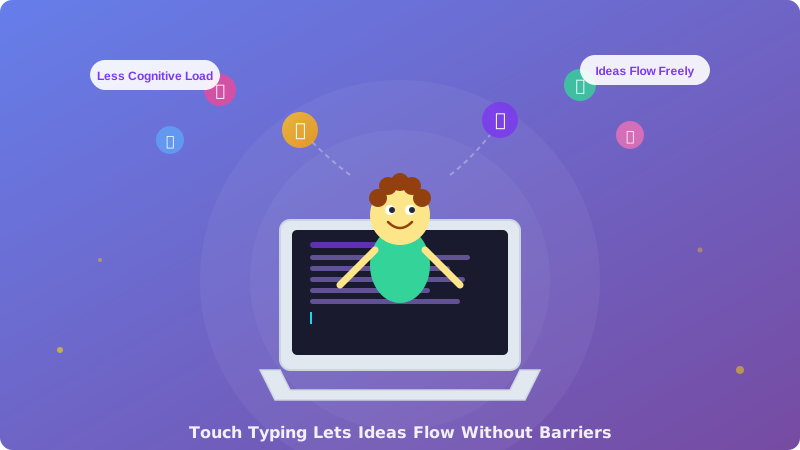
If you're the parent of a child with dyslexia, ADHD, dyspraxia, or another learning difference, you've probably had some version of this experience: your child has brilliant ideas, vivid stories, and sharp observations - but getting them down on paper is a battle. The handwriting is slow, messy, or physically exhausting. The frustration builds. And somewhere in that struggle, the actual ideas get lost.
This is where touch typing can be genuinely transformative. Not as a nice extra skill, but as a practical tool that changes how neurodiverse children interact with written communication. Let's look at why.
The Cognitive Load Problem
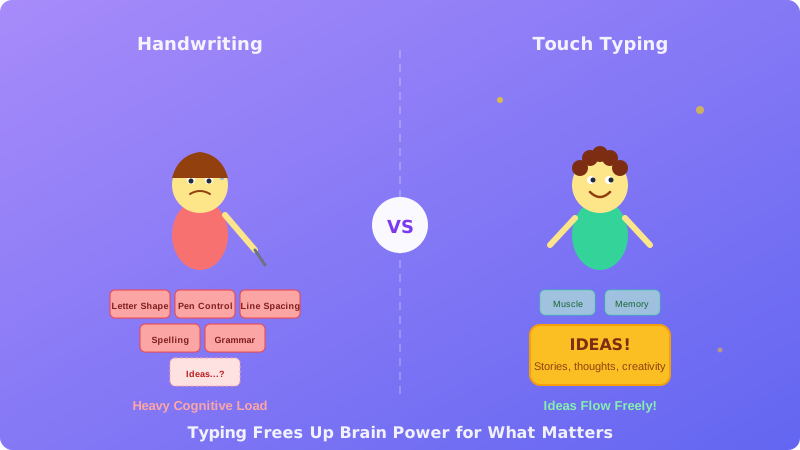
Here's the concept that explains everything: cognitive load. Everyone has a limited amount of mental energy available for any given task. When a child writes by hand, they're simultaneously managing letter formation, spacing, line tracking, spelling, grammar, and the actual content of what they're trying to say.
For neurotypical kids, many of these processes become automatic over time. But for children with learning differences, some of them never fully do. A child with dyslexia might spend enormous mental effort just forming individual letters correctly. A child with ADHD might lose their train of thought entirely during the slow, laborious process of handwriting. The result is the same: the mechanics of writing consume the energy that should be going to the thinking.
Touch typing changes this equation. Once typing becomes automatic through muscle memory, the physical act of getting words onto a screen requires almost no conscious thought. Fingers move to the right keys without the brain having to think about letter shapes, pen pressure, or line spacing. That frees up cognitive resources for what actually matters: the ideas.
Why Typing Works for Dyslexia
Children with dyslexia often struggle with the visual-motor integration that handwriting demands. Forming letters by hand requires remembering what each letter looks like and translating that into specific hand movements - a process that's genuinely difficult for many dyslexic learners.
Typing sidesteps this entirely. Instead of drawing a letter, the child presses a key. The motor pattern is simpler and more consistent - the "d" key is always in the same spot, pressed the same way. There's no confusion between similar-looking handwritten letters, no inconsistent letter sizing, no struggling with cursive joins.
There's also a significant benefit from seeing clean, consistent text appear on screen. For dyslexic children who've spent years looking at their own messy handwriting and feeling demoralised, seeing their words appear in neat, readable type can be genuinely confidence-boosting. Their work finally looks the way it sounds in their head.
Why Typing Works for ADHD
ADHD brings a different set of challenges. Handwriting is slow, and for a child whose brain moves quickly between ideas, that slowness creates a painful bottleneck. By the time they've finished writing one sentence, they've forgotten the next three they wanted to put down.
Typing is faster. Even moderate typing speed (25-30 WPM) significantly outpaces handwriting speed, which means ideas can flow from brain to screen with far less delay. For ADHD kids, this speed difference is the difference between capturing a thought and losing it.
There's also the engagement factor. Let's be honest - handwriting practice is rarely exciting for any child, but it's especially tough for kids who need more stimulation to maintain focus. Typing practice, especially when it's built around stories and games, provides the kind of interactive, fast-paced experience that works with ADHD rather than against it.
Why Typing Works for Dyspraxia
Dyspraxia (developmental coordination disorder) directly affects fine motor skills, which makes handwriting one of the hardest daily tasks for affected children. The physical act of holding a pen, controlling pressure, and forming letters can be exhausting and painful.
Typing requires far less fine motor precision. Key presses are larger, more uniform movements compared to the intricate control needed for handwriting. Many occupational therapists specifically recommend touch typing as a primary writing tool for children with dyspraxia - not as a supplement to handwriting, but as a practical replacement for longer written work.
Making Typing Practice Work for Neurodiverse Kids
Knowing that typing helps is one thing. Getting a neurodiverse child through the learning curve is another. Here are some practical approaches:
- Keep sessions short - 10-15 minutes is plenty. For ADHD kids especially, two short sessions beat one long one every time
- Use story-based practice - platforms like TypingTales that weave typing into narratives give kids a reason to keep going. They're not just typing random words; they're finding out what happens next
- Celebrate progress, not perfection - a child with dyslexia who types 15 WPM with proper technique is making brilliant progress. Don't compare to neurotypical benchmarks
- Make it routine - consistency matters more than session length. A few minutes every day builds muscle memory faster than occasional long sessions
- Reduce visual clutter - choose typing tools with clean, simple interfaces. Busy screens with too many distractions work against ADHD learners
What the Research Says
This isn't just anecdotal. Studies consistently show that touch typing improves writing output for children with learning differences. Research published in the British Journal of Special Education found that dyslexic students who learned touch typing produced longer, better-quality written work. Separate studies on ADHD and writing have shown that the increased speed of typing helps children maintain focus and produce more coherent text.
Many educational psychologists now include "learn touch typing" as a standard recommendation in assessment reports for children with dyslexia, ADHD, and dyspraxia. It's increasingly recognised not as an optional extra, but as an essential access tool.
It's Not About Replacing Handwriting Entirely
Let's be clear: this isn't about saying handwriting doesn't matter or that neurodiverse kids should never write by hand. Handwriting has its own cognitive benefits and its place in education. But for longer written work - essays, creative writing, note-taking - typing gives neurodiverse children an alternative path that removes the biggest physical barrier between their ideas and the page.
And that's really the point. Every child deserves to have their ideas heard. For many neurodiverse learners, touch typing is the tool that makes that possible.
The Bottom Line
If your child struggles with handwriting due to dyslexia, ADHD, dyspraxia, or another learning difference, teaching them to touch type isn't just about computer skills. It's about giving them a way to express themselves without the physical and cognitive barriers that handwriting creates. Start with short, story-based sessions, keep expectations realistic, and watch as their confidence - and their words - start to flow.