Screen Time vs. Skill Time: Making Typing Practice Feel Like a Reward
Every parent knows the screen time dilemma. Your child asks for "just ten more minutes," and you're doing the mental maths - they've already had an hour of YouTube, twenty minutes of a mobile game, and now they want more. You feel guilty saying yes, stressed saying no, and somewhere in the middle is the quiet hope that some of their screen time could actually be useful.
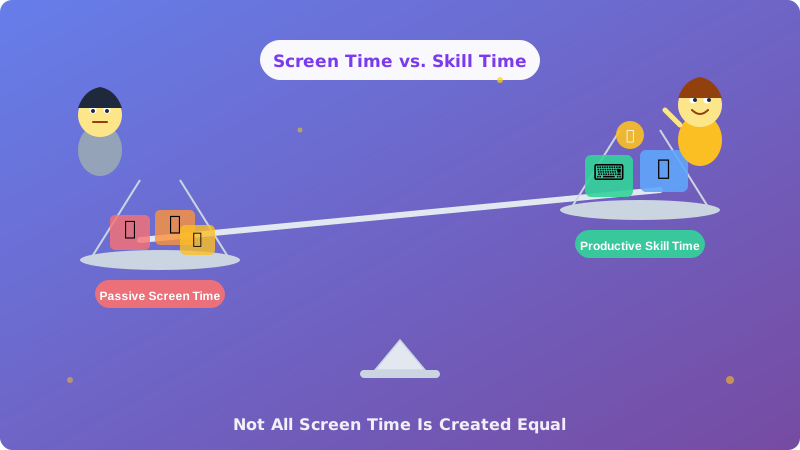
Here's the thing: not all screen time is equal. And typing practice, done the right way, can sit firmly on the "productive skill-building" side of the ledger. The trick is framing it so your child sees it that way too.
The Screen Time Spectrum
Think of screen time as a spectrum rather than a single thing. On one end, you have passive consumption - scrolling through videos, watching content on autoplay, tapping mindlessly through a game. On the other end, you have active creation and skill-building - making things, solving problems, learning through practice.
Typing practice lands firmly on the active end. When a child is typing, they're engaging fine motor skills, processing language, building muscle memory, and (with story-based approaches) following a narrative. Their brain is working, not zoning out. That's a fundamentally different experience from passive watching, even though both involve a screen.
The research backs this up. Studies on children's screen time consistently show that the type of screen activity matters far more than the total hours. Active, educational screen use doesn't carry the same concerns as passive consumption. So when your child spends 15 minutes on a typing adventure, that's genuinely different from 15 minutes of random scrolling.
Why Kids Resist "Educational" Anything
Let's be honest about the problem. The moment a child hears the word "educational," something switches off. They've learned to associate it with thinly disguised homework - boring content wrapped in a colourful interface that's trying too hard to be fun.
This is why framing matters so much. If you say "time for your typing lesson," you'll get resistance. If you say "want to do your typing story before dinner?" the response can be completely different - especially if the last session ended on a cliffhanger.
The key is that the educational part needs to be genuinely invisible to the child. They should feel like they're playing a game or reading a story that happens to involve typing, not doing a drill that happens to have a thin story pasted on top. That's the difference between good educational design and bad educational design.
Strategy 1: Make It Part of the "Fun Screen Time" Budget
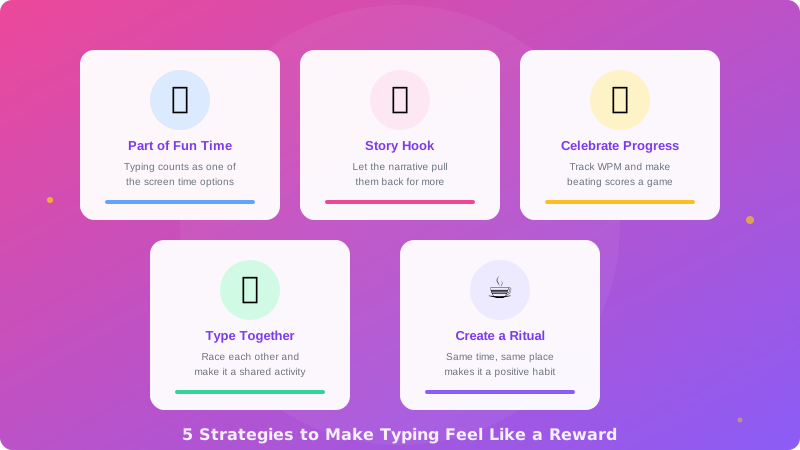
Instead of positioning typing as homework that uses a screen, position it as one of the screen time options available. "You can watch a show, play your game, OR do a typing story - your pick." When typing earns a spot alongside entertainment options rather than being categorised with chores, kids start choosing it voluntarily.
Some parents go further: typing practice doesn't count against screen time limits. It's "bonus" time. This reframes it as a privilege rather than an obligation, and you'd be surprised how quickly kids start choosing the thing that gets them extra time.
Strategy 2: Use the Story Hook
This is where story-based typing platforms like TypingTales really shine. When typing is wrapped in a narrative - with characters, choices, and plot progression - kids want to come back because they want to find out what happens next. It works exactly like a good book or a good TV series.
You can lean into this. "Don't you want to find out what happens to the dragon?" is a far more compelling prompt than "have you done your typing today?" The story creates its own motivation, and the typing becomes the means to advance through it, not the point of the exercise.
Strategy 3: Celebrate Progress Visibly
Kids love tracking their own progress when it's presented in a way that feels rewarding. Words per minute going up. Accuracy percentages climbing. Stories completed. Characters unlocked. These markers of achievement tap into the same psychology that makes video games addictive - but in service of an actual skill.
Put their progress somewhere visible. A simple chart on the fridge showing their WPM each week. A running count of stories typed. Even a verbal "you did 22 words per minute last time - want to try beating it?" creates a game-like feel that makes practice appealing.
Strategy 4: Type Together
This one's underrated. Sit down and type alongside your child. Race each other. Take turns typing sentences in a story. Make it a shared activity rather than something you assign and then walk away from. Kids respond powerfully to parental involvement, and when they see you typing (and maybe even struggling), it normalises the learning process.
It also gives you a natural way to model good habits: proper posture, eyes on the screen, fingers on the home row. Kids pick up more from watching you do it than from hearing you explain it.
Strategy 5: Set Up a "Typing Session" Ritual
Rituals make habits stick. Maybe typing happens right after school snack time, with a specific drink and a comfortable spot. Maybe it's the Saturday morning activity before cartoons. Maybe there's a special "typing playlist" that plays in the background.
The specifics don't matter - what matters is that typing has its own time and space that the child associates with something positive. When it becomes "their thing" rather than "something Mum makes me do," the battle is won.
The Bottom Line
The screen time debate doesn't have to be all-or-nothing. Typing practice is productive, skill-building screen time that gives your child something genuinely valuable. The key is in the framing: make it feel like a game, wrap it in stories, celebrate progress, and give it a positive place in your family's routine. When typing practice feels like a reward rather than a requirement, you'll stop having to ask your child to do it - they'll ask you.